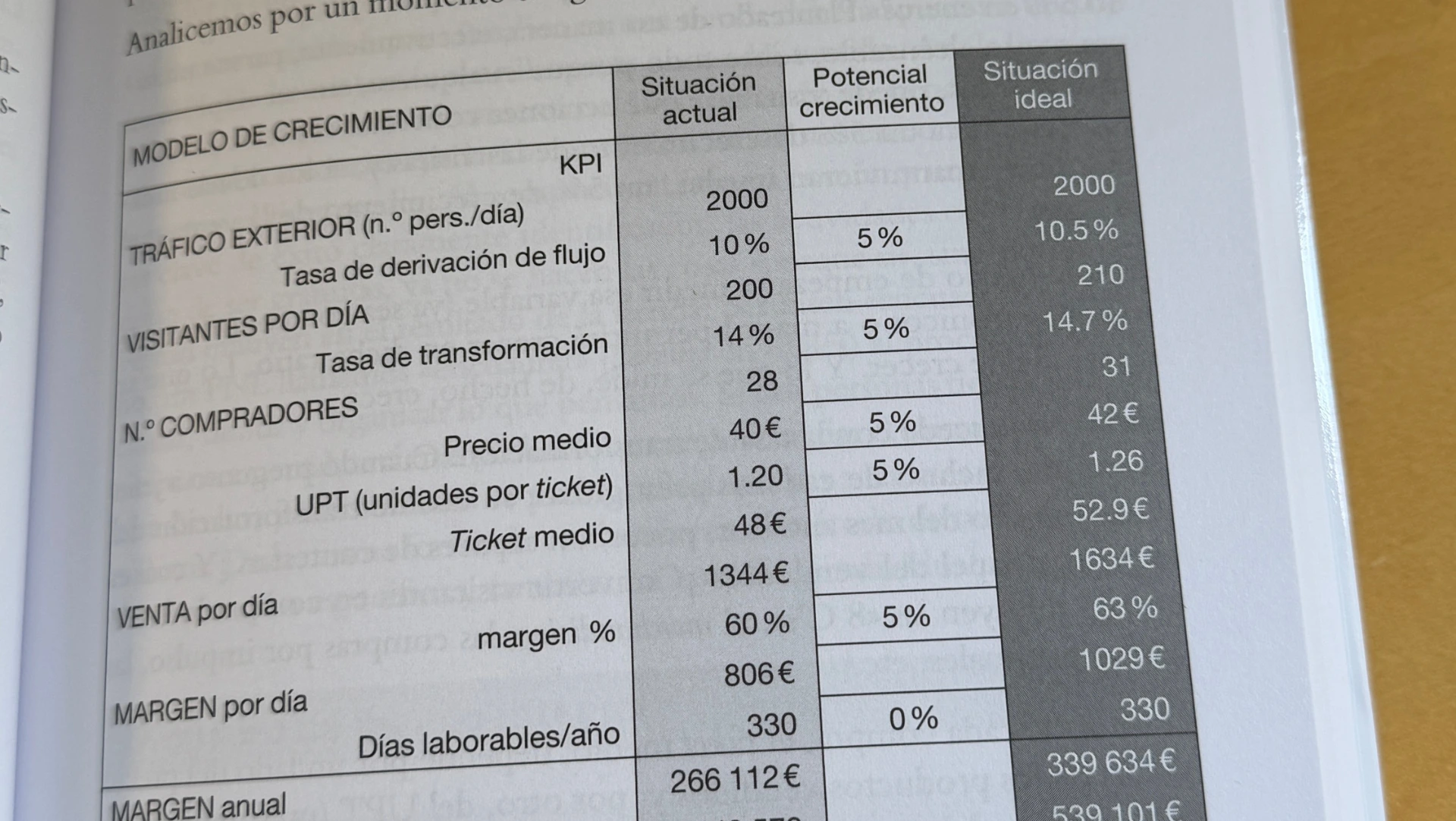
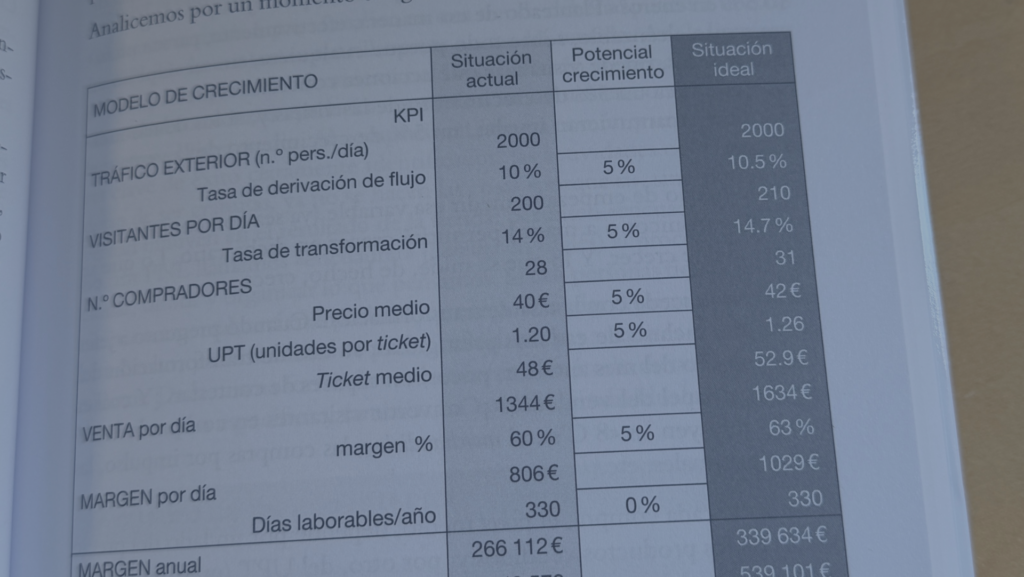
Esta es una imagen detallada de una tabla de un libro de texto con el encabezado "MODELO DE CRECIMIENTO" y cuatro columnas principales: "KPI", "Situación actual", "Potencial crecimiento" y "Situación ideal".

Traffic doesn’t depend on me

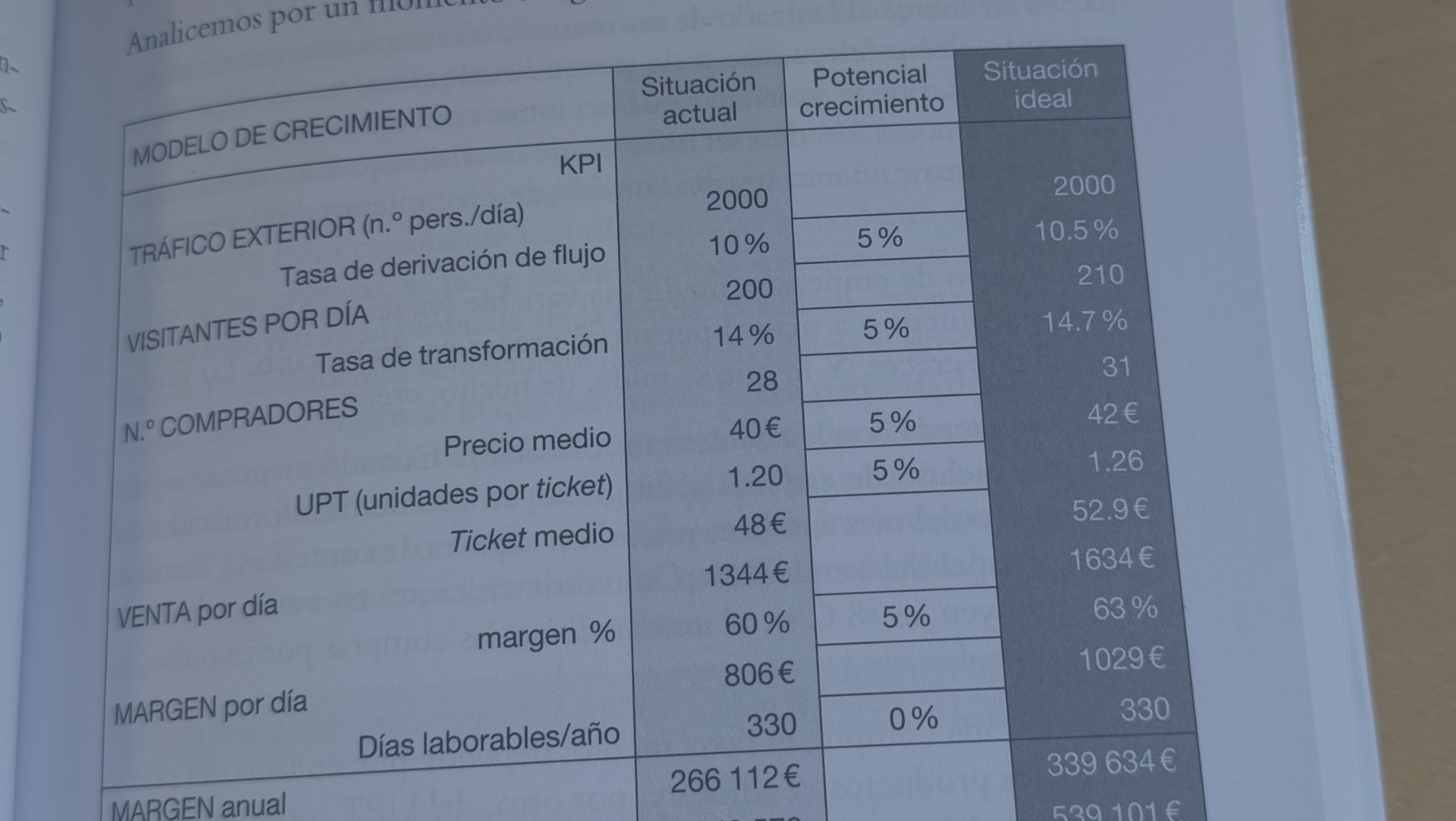
Esta es una imagen detallada de una tabla de un libro de texto con el encabezado "MODELO DE CRECIMIENTO" y cuatro columnas principales: "KPI", "Situación actual", "Potencial crecimiento" y "Situación ideal".

Traffic doesn’t depend on me

Retail leaders tell me this very often.

Area Managers
Store Managers
Sales Advisors

And honestly… they are not entirely wrong.

When we talk about sales performance, most retail teams focus on three key KPIs:

  • Conversion rate
  • Average transaction value
  • UPT (Units per Transaction)

And they should. These indicators are essential to manage in-store sales effectiveness.

However, in our Retail Coaching Certification, CapKelenn coaches often challenge teams on a more uncomfortable lever:

Traffic — or footfall.

CAN A STORE TEAM INFLUENCE FOOTFALL?

In my book Retail Coaching (page 24), I introduce the Extraordinary Growth Model.

A simple question emerges:

Can a store team attract 10 more visitors per day?

Most managers immediately respond:

“Traffic — footfall — doesn’t depend on us.”

So I ask:

“Then… who does it depend on?”

Marketing
The weather
The political climate
Construction in the street

Of course, all these factors can influence store footfall.

But is that the whole story?

CONTROL VS INFLUENCE IN RETAIL LEADERSHIP

In The 7 Habits of Highly Effective People, Stephen Covey distinguishes between two circles:

  • what we CONTROL
  • what we INFLUENCE

This distinction is fundamental in Sales Coaching.

Coaching becomes powerful when managers stop focusing only on what they control and start exploring what they can influence — including store traffic.

MY BAKER’S SMILE

Let me share a simple example.

My baker, in the village square of Séné, in Brittany.

Her smile.
Her welcome.

The personal connection she creates with each customer.

I call this “my baker’s smile”.

This experience creates:

  • reputation
  • word of mouth
  • loyalty

…and sometimes even a small “addiction” to her bakery.

And ultimately?

Traffic.

CREATING FANS IN RETAIL

The same applies in cosmetics, fashion, jewelry, telecom, or any retail environment.

So a few questions arise for store teams:

  • Can your store generate fans?
  • Does your team develop strong clienteling relationships?
  • Does your store experience become something people talk about?

In 90% of our training sessions, retail leaders initially insist that footfall is outside their responsibility.

But coaching becomes powerful when the mindset shifts.

Not only focusing on what depends on us,

A QUESTION FOR RETAIL LEADERS

Extraordinary retail growth often starts with a very simple question:

What could we do today to attract “just” 10 more visitors?

In other words:

Can store teams influence footfall?

Esta es una imagen detallada de una tabla de un libro de texto con el encabezado "MODELO DE CRECIMIENTO" y cuatro columnas principales: "KPI", "Situación actual", "Potencial crecimiento" y "Situación ideal".

www.capkelenn.com

info@capkelenn.com


Benoit Mahé – Co-founder of CapKelenn

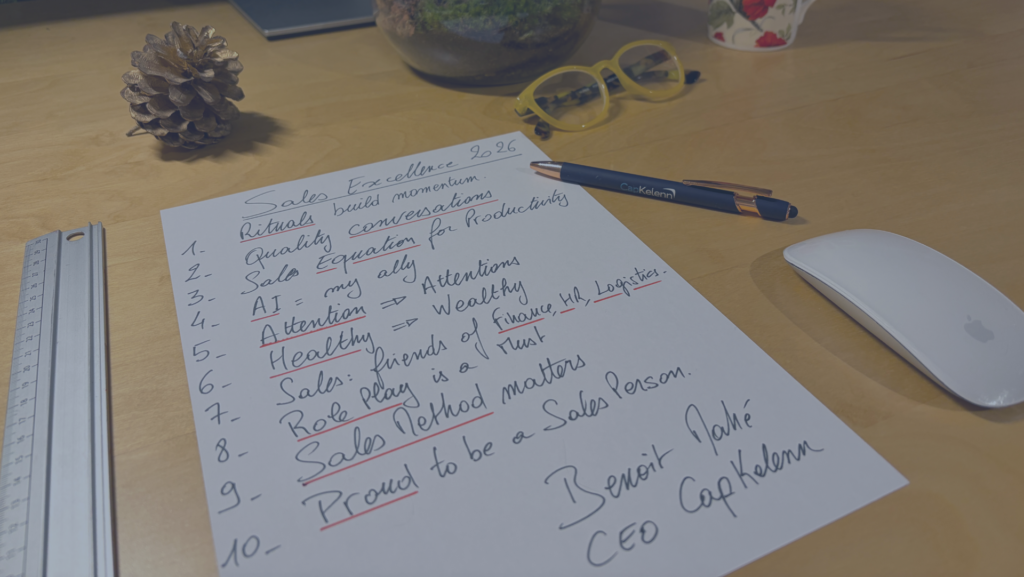
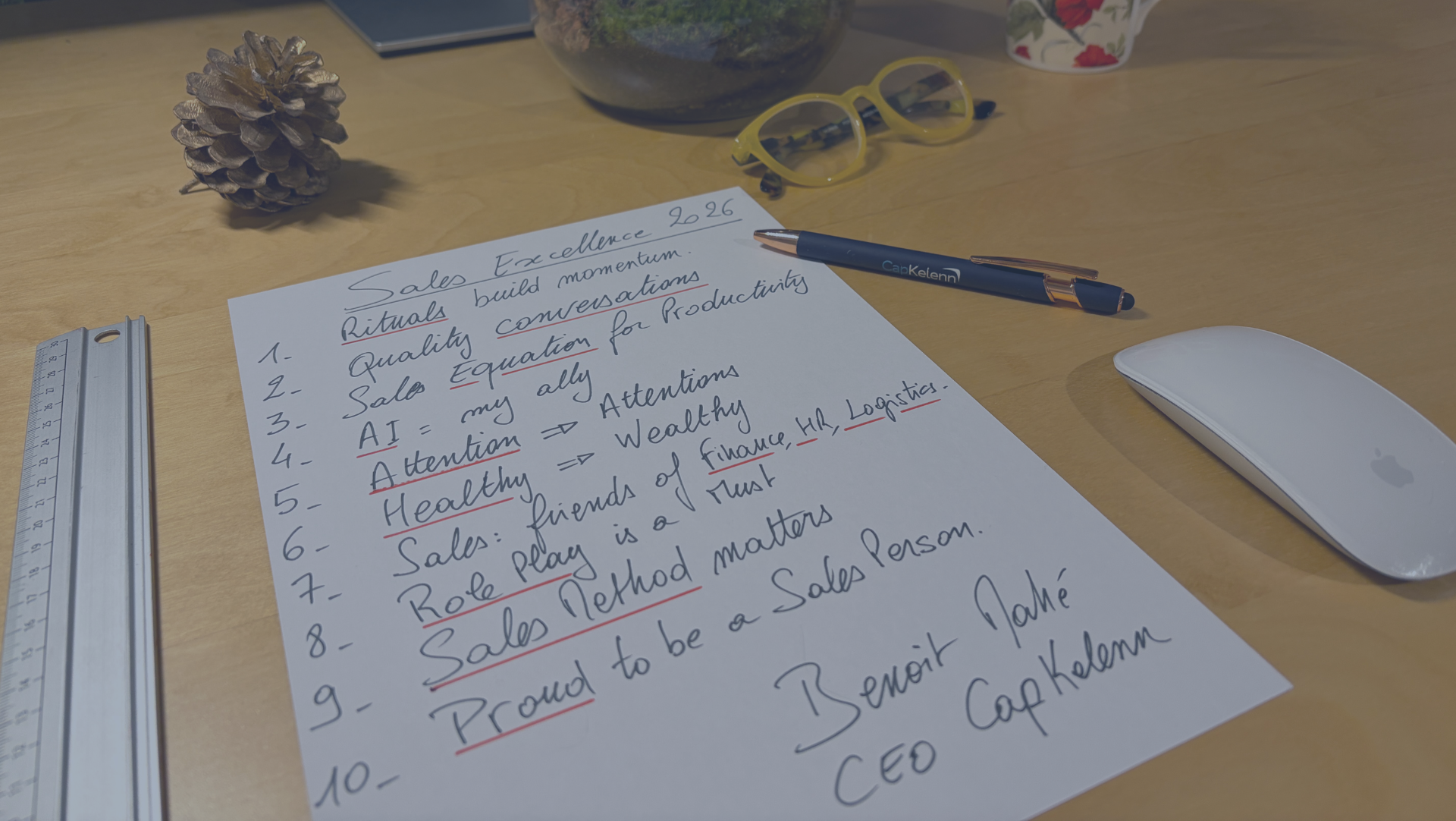
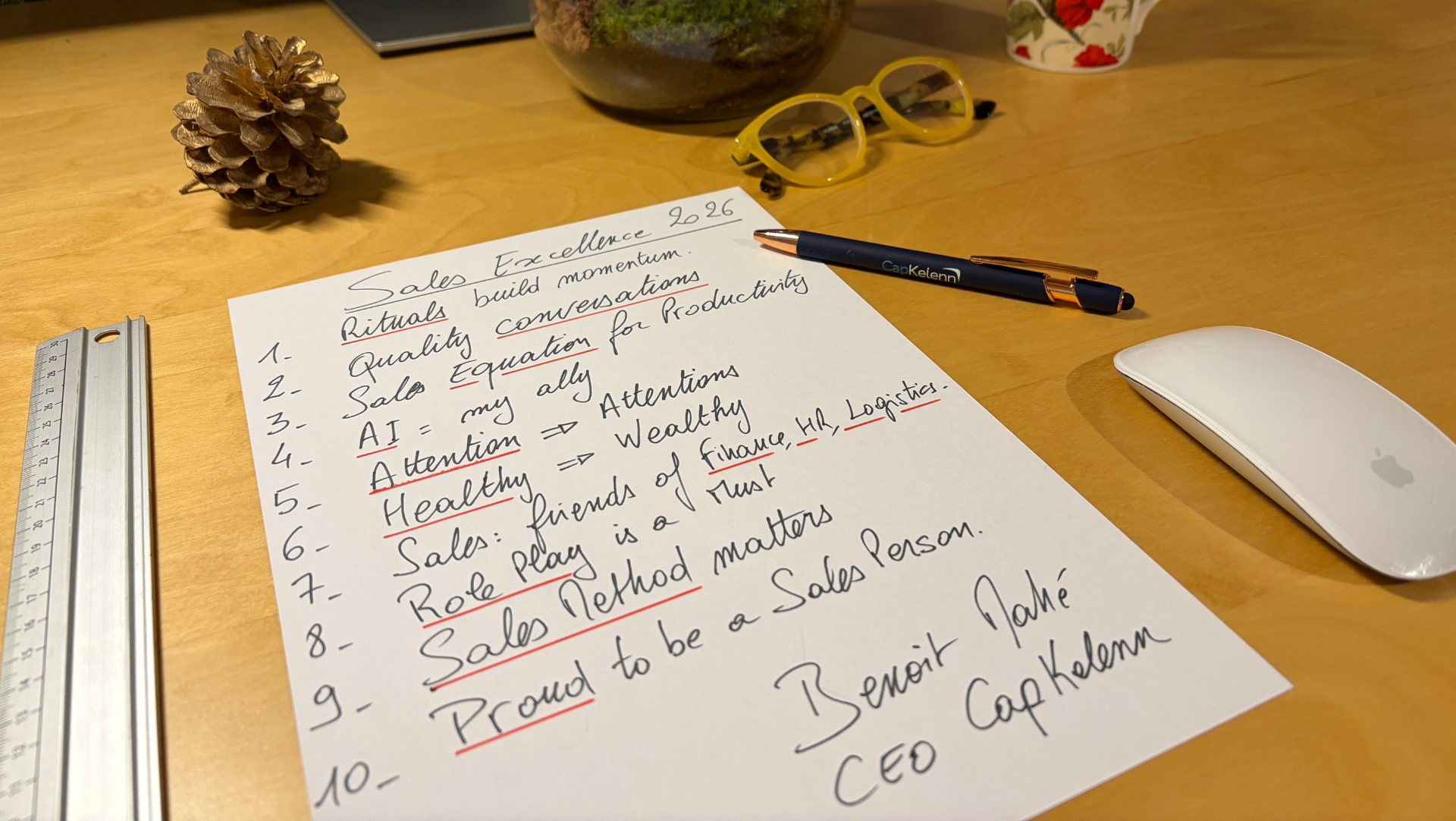
Our 10 Levers for Sales Excellence in 2026

Our 10 Levers for Sales Excellence in 2026

 SALES EXCELLENCE in 2026 means mastering KPIs, human connection… and AI.

After several weeks immersed in Sales Excellence certification programs with top-tier organizations, I paused to reflect:

What truly drives high performance in today’s sales organizations—across B2B and B2C, retail, wholesale and multichannel ?

Here are my 10 core beliefs for sustainable sales excellence:


1. RITUALS BUILD MOMENTUM

Regular steering meetings, coaching sessions, and performance reviews aren’t optional.

They create rhythm, awareness, and accountability.

2. SALES = QUALITY CONVERSATIONS 

Authentic dialogue is at the heart of both selling and managing.

Sales mindset and sales culture emerge from consistent, high-quality conversations : Sales Coaching !

3. SALES EQUATIONS UNLOCK RESERVES OF PRODUCTIVITY

Sales = Contacts × Conversion × Average Price × UPT

Simple. Strategic. Underused. 

This formula is a goldmine for coaching and decision-making.

4. AI is an Ally

AI enhances—not replaces—human intelligence.

In coaching, we ask powerful questions. 

In AI, we use powerful prompts. The mindset is the same.

5. ATTENTION = ATTENTIONS

Noticing leads to caring. When team members across roles contribute client insights, sales culture is alive. Sales mindset generate attention to client ‘s needs, to offer personalized attentionS.

  • Being attentive (to client) creates moments of attentionS.

6. HEALTHY = WEALTHY 

Sales growth can’t thrive in toxic or high-turnover environments. Purpose-driven, psychologically safe cultures are the foundation of lasting success.

7. ALIGNING SALES WITH OTHER DEPARTMENTS 

Sales department is often in tension with finance, logistics, HR… But the solution is not silence or conflict—it’s coordination of actions.

At CapKelenn, we teach this in our Level 2 Sales Coaching certification: creating the right internal conversations to align goals, balance requests, and avoid resentment between departments.

  • True sales excellence requires collaboration, not isolation. Make your finance manager, or logistic partner, proud of your sales success. 

8. ROLE PLAY IS A MUST 

Only 10% of sales leaders use role play regularly. But imagine a tennis player or theater actor skipping practice…

  • Sales is performance. Rehearsal is transformation.

9. SALES METHOD MATTERS

Our CapKelenn Sales Coaching 8C’s Method connects each step of the sale to key KPIs: conversion, UPT, ASP, CLTV.

  • Selling is not (only) improvisation—it’s a method.

10. SALES PEOPLE SHOULD FEEL PROUD

With their children, friends… and in-laws ! :

“I’m a sales expert. I master the art and science of selling.” 

This is the identity we ignite. Sales intelligence can be trained, steered, and celebrated.

Which of these 10 beliefs is your next opportunity ?

sales-excellence-2026

www.capkelenn.com

info@capkelenn.com


Benoit Mahé – Cofounder of CapKelenn 

Coaching: How to handle unexpected situations in training sessions

Coaching: How to handle unexpected situations in training sessions

 5 tricky TRAINING Challenges — What Would You Do?


In the last two weeks, I’ve faced 5 interesting situations while managing training sessions at CapKelenn | Sales & Retail Coaching.

Each one reminded me that being a Trainer-Coach is never routine — it’s about adapting, listening, and keeping our smile!
Before I share my own answers on those 5 situations…
I’d love to hear your thoughts and experiences!

Here are the 5 real-life cases:

  1. One participant in a training program delivered in English doesn’t speak English… at all. Yet, he’s a key figure for the group’s success.
  2. One participant in another company has to miss the 1st of 3 Cycles due to a medical emergency involving his wife — but he’s willing to connect from the hospital while waiting.
  3. As we prepare the classroom, my trainer-coach colleague neatly arranges the folders and pens… but I realize the logo on the pen faces down. Just a detail?
  4. A client books a large Airbnb house to host a 4-day training — but there’s no space for the trainers!
  5. A Retail professional we trained 7 years ago spontaneously recommends our Sales Program to a growing company’s CEO.
    Now he’s asking for a commission… even though no referral agreement was ever set.

How would you handle each of these 5 situations?
Your perspective matters — let’s learn from each other!

Trainers, sales, and retail professionals from 🇫🇷 France and 🇪🇸 Spain, and over the world, your insights are especially welcome!

capkelenn-formación-en-ventas-sales-training-formation-à-la-vente-verkaufstraining

www.capkelenn.com

info@capkelenn.com


Benoit Mahé – Co-founder of CapKelenn 


A path of leadership, resilience and inspiration

A path of leadership, resilience and inspiration

 A trail of leadership, resilience… and inspiration.


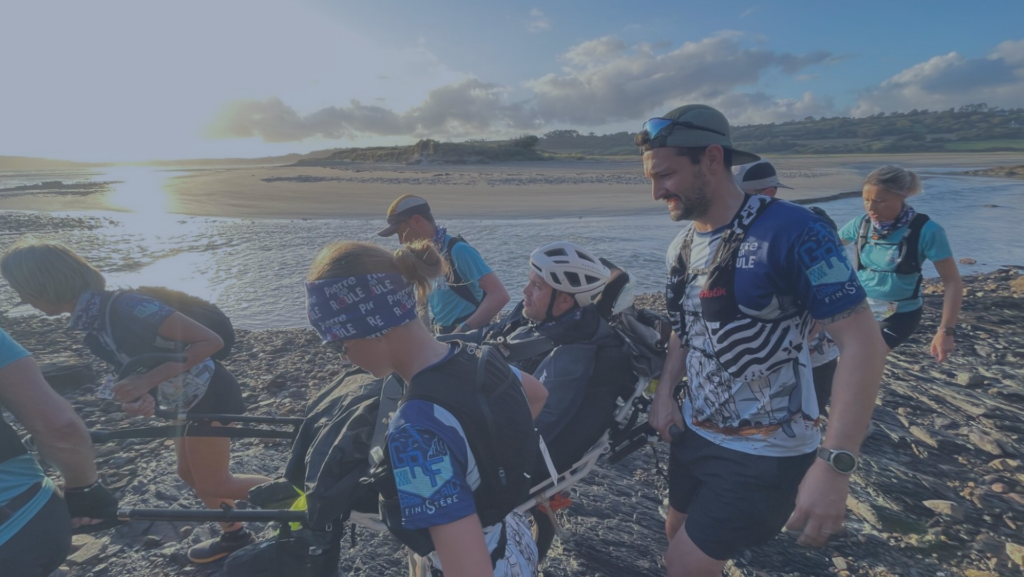
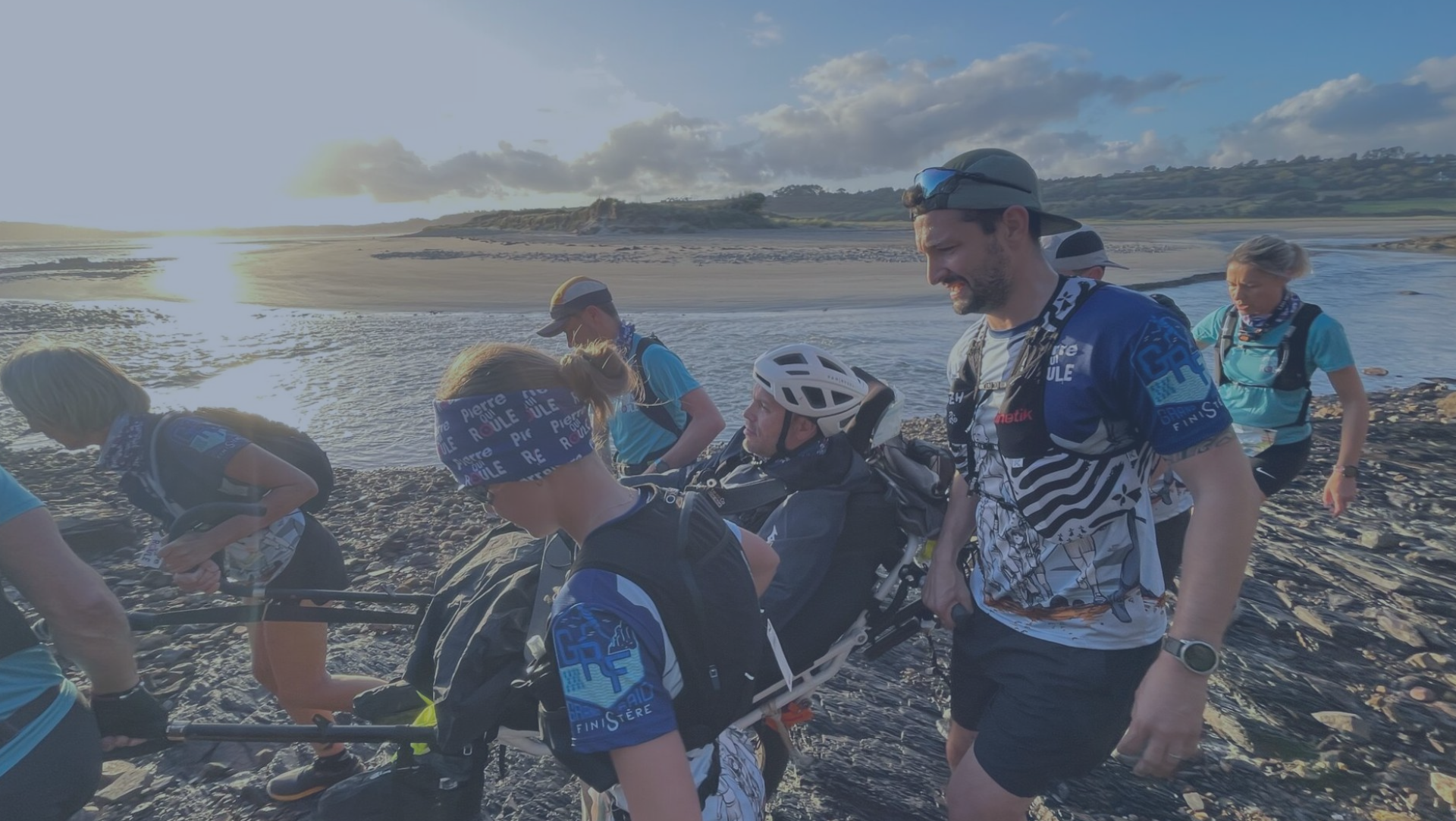
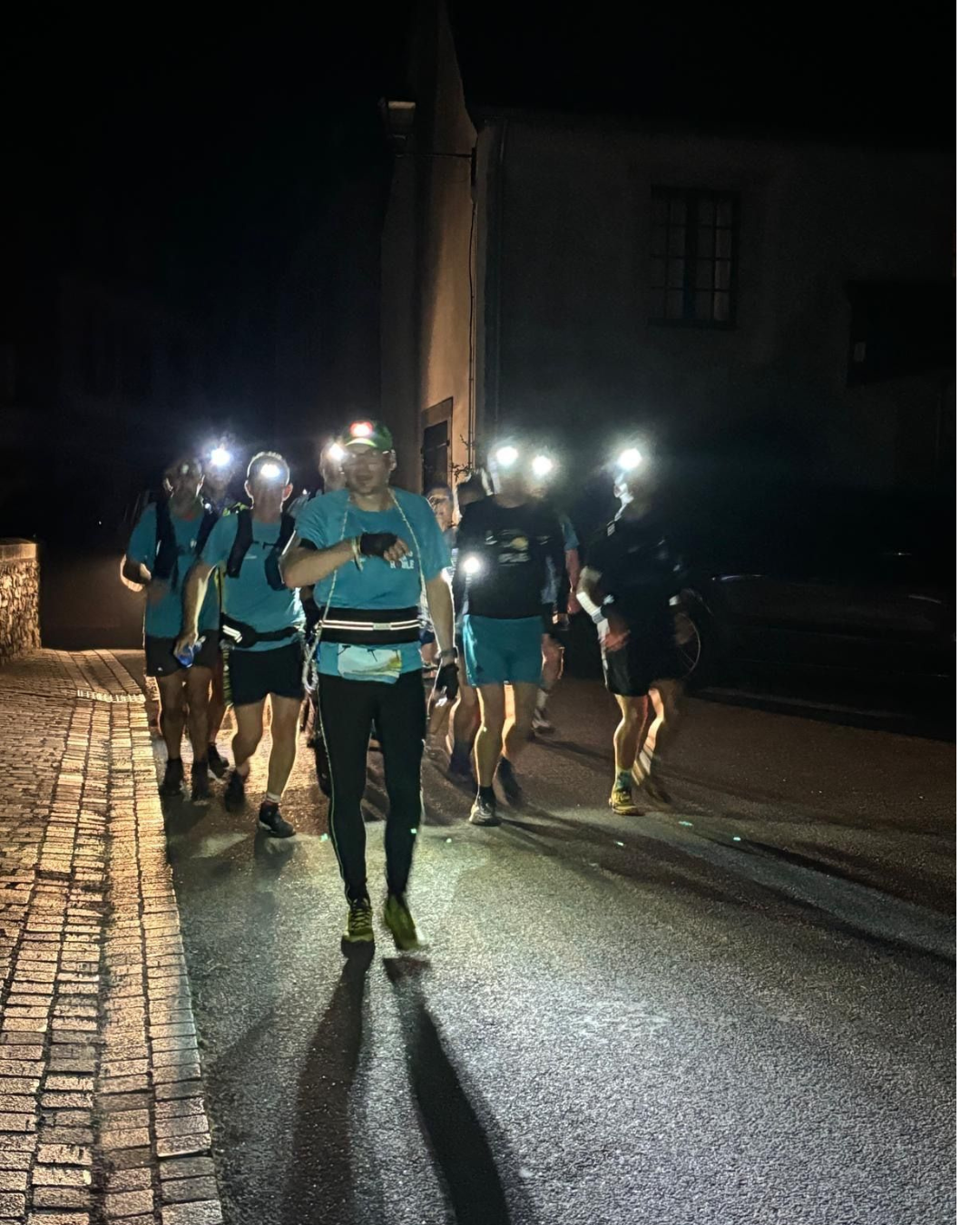
In 2010, Pierre Tarance became quadriplegic at the age of 27 after a ‘cathedral tackle’ during a Vannes Rugby Club match. At Kerpape Hospital, he met Marie, his physiotherapist… They fell in love, got married and had two children.

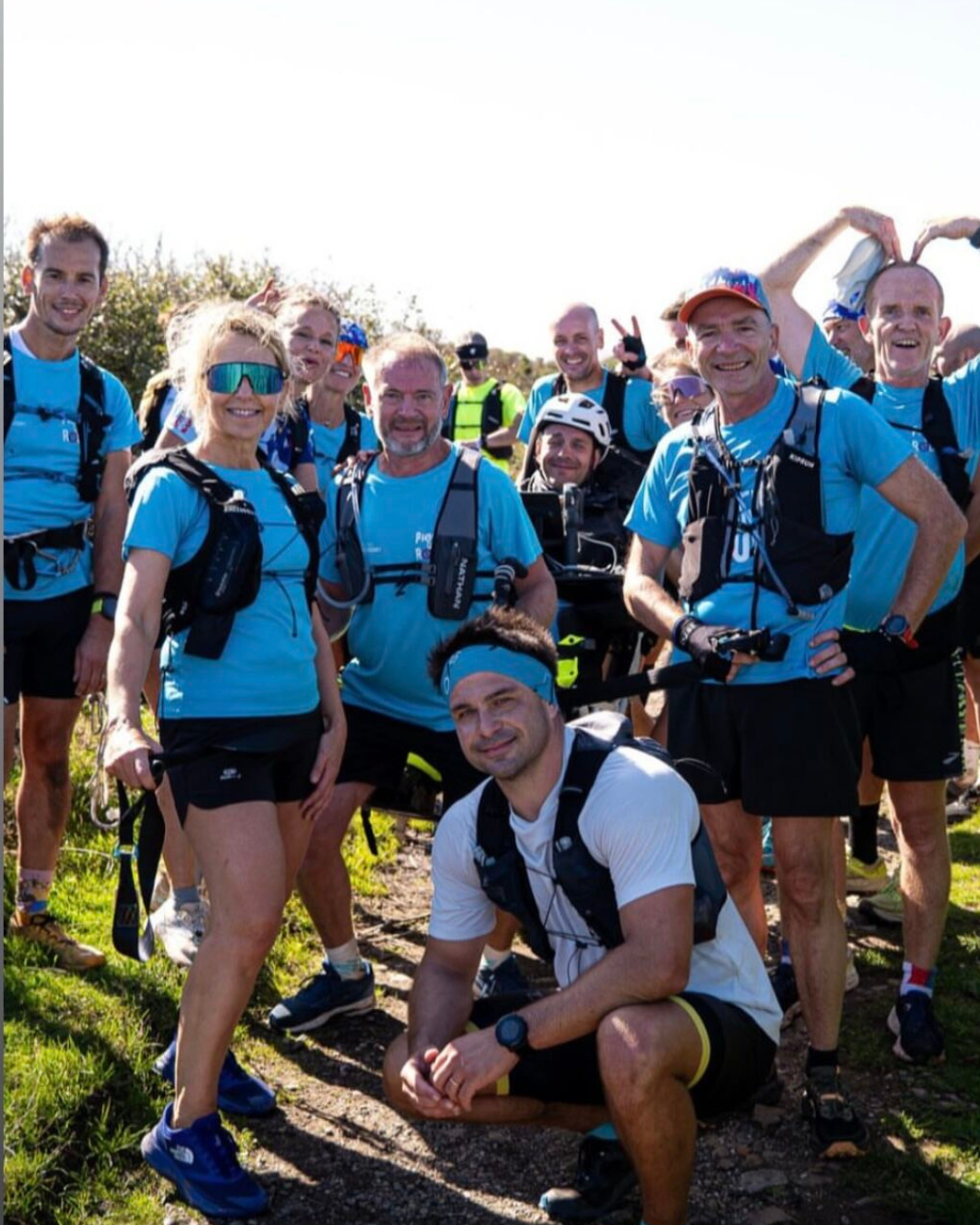
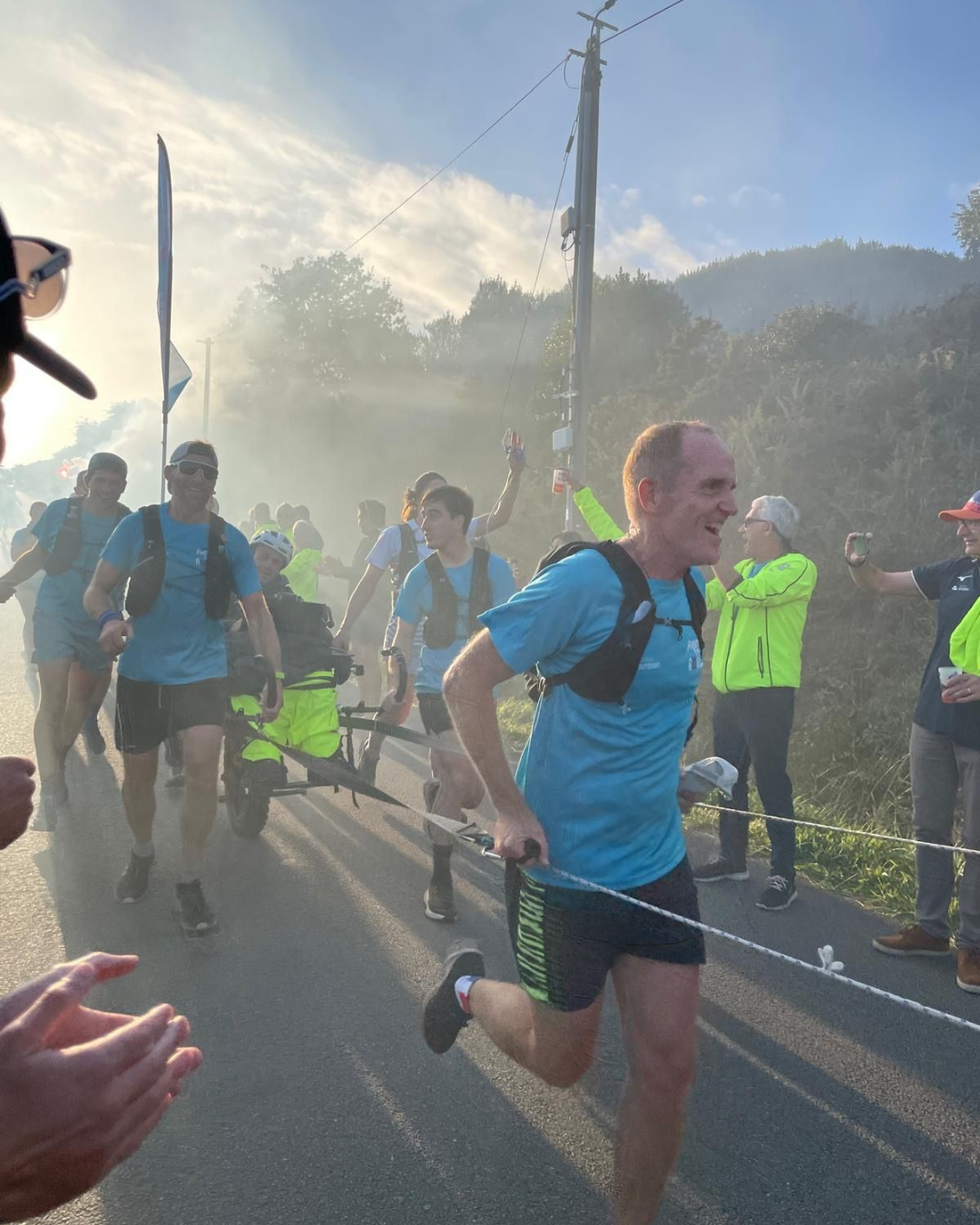
On 19 and 20 September, Pierre covered 165 km of the Grand Trail du Finistère in 28 hours, carried by a team of 100 runners coordinated by Marie. I had the honour of being one of them.

It all started when a group of enthusiasts (Olivier Savourel, Daroussin Pascale, Maximilien Daroussin) suggested to Pierre that he go for a ride in a joëlette. At the end of that day, Pierre told them: ‘Feeling the wind on my skin again at full speed… that’s priceless.’

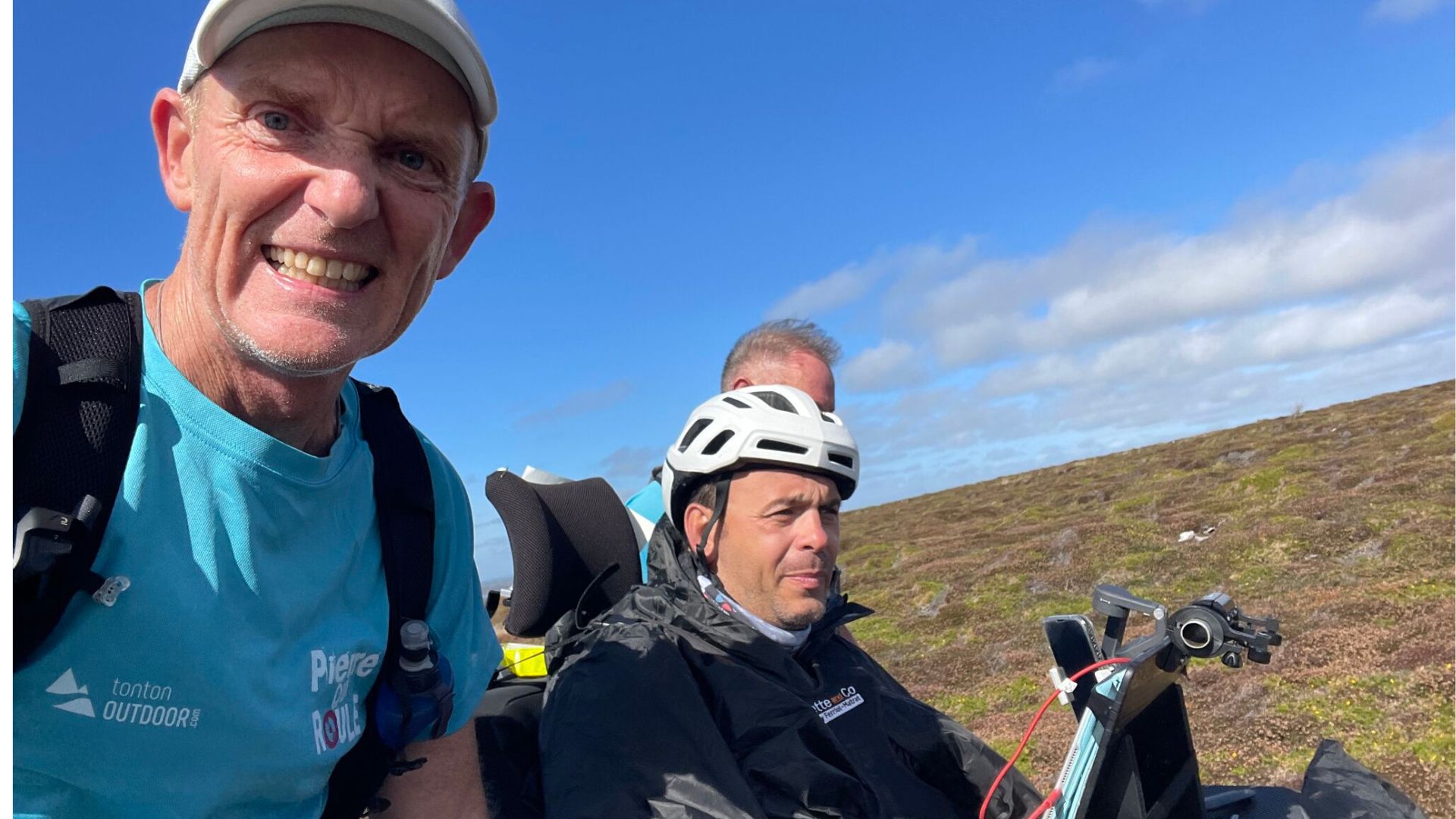
Pierre is not a passenger. He is the leader. He knows high-level sport, the culture of effort and team spirit.

In the centre of the joëlette, tablet in hand, he trains, guides and motivates: ‘Come on, guys, goal: aperitif or dinner?’ The result: everyone surpasses themselves; no one wants to slow down the group.

He is also a rugby coach in Auray. This weekend, his team won without him. As if by fate. 100 runners. 48 hours together. Couples, strangers… united by a common purpose.

Leadership is also about this: creating a world that others want to belong to.

The Pierre qui Roule association orchestrated impeccable logistics thanks to dozens of volunteers. This raises a question: what projects can we propose that will inspire others to get involved, contribute and feel excited?

A joëlette is piloted by 3, 7 or 9 people, with defined roles: pony, horns, leader… Everyone finds their place naturally. Distributed leadership, coordination, trust, collective power.

And then… arriving at the beach, singing, at dusk and under the smoke of the flares… Magical.

This weekend, I remembered my American friend and speaker W Mitchell (quadriplegic and 80% burned) and his two iconic phrases:

  1. “What happens to you doesn’t matter; what matters is what you do with it!”
  2. “Before, I could do 10,000 things. Today, 9,000!”

If I had to motivate a team again or rebuild a bond, I wouldn’t hesitate for a second: 48 hours with Pierre in the joëlette. Or invite him to your next convention.

Bravo, Pierre. Bravo, Marie.

A couple of entrepreneurs with a purpose.

You embody powerful, inspiring… and deeply human leadership.

liderzgo_leadership_fuehrung_3

www.capkelenn.com

info@capkelenn.com


Benoit Mahé – Co-founder of CapKelenn 


centros de llamada

Empowering Call Centers Through Retail Coaching

centros de llamada

Empowering Call Centers Through Retail Coaching

In the dynamic world of call centers and digital service centers, where customer advisors primarily interact through voice, email, or platforms like WhatsApp, the challenges they face are as complex as those of any front-line sales position. These professionals must efficiently manage both inbound and outbound interactions while striving for service excellence and meeting key business objectives. As the omnichannel approach has solidified, new challenges have emerged that require highly effective leadership and coaching.

Adapting Coaching to Digital Service Centers


At CapKelenn | Sales & Retail Coaching, we have tailored our Retail Coaching Program to specifically address the needs and demands of today’s digital environment. By adjusting KPIs, scripts, sales methods, and meeting formats, we provide managers with the tools needed to optimize their teams’ performance in this dynamic setting. Our goal is for managers not only to achieve their targets but also to foster a culture of continuous improvement and mutual support within their teams.

Inspiring Leadership in the Real World


We’d like to highlight the valuable contribution of our coach, Gordana Panajotović, ICF PCC, who has extensive experience leading a 70-person team in a digital service environment. The practical insights Gordana shares are essential for managers operating in these high-demand settings. Her approach enables managers to transform their role from simple supervisors to true leaders and coaches, helping their teams reach their maximum potential.

The Impact of Coaching on Service Excellence


The impact of coaching tailored to the needs of the digital environment is clear: teams feel more engaged, inspired, and supported, even when working remotely or behind a screen. This comprehensive coaching approach not only boosts sales results but also enhances customer interactions, leading to greater customer satisfaction and improved service quality.

Redefining the Call Center Narrative


The call center industry is evolving rapidly. With the right coaching strategies, it’s possible to transform team performance and culture. By focusing on leadership, continuous training, and team empowerment, we provide managers with the tools they need to guide their teams to lasting success, improving both individual and collective performance.

🚀 Is your team ready for the transformation? We’re here to help you redefine the future of your digital service center with a strategic coaching approach.


www.capkelenn.com

info@capkelenn.com

Benoit Mahé – Co-founder of CapKelenn


NPS: THE NEW ERA KPI

NPS: THE NEW ERA KPI

NPS : Net Promoter Score

I have always put customer’s satisfaction with our product or service first. Indeed, when I started my career in the 90s, it was a very hot topic. Various measuring methods have been developed and implemented in order to evaluate and track the users and customers’ satisfaction, like the Mystery shoppers, satisfaction surveys, etc.

However, despite the success these concepts have reached their time, the priorities have changed. These have adapted to today’s accelerated changes. As a consequence, the new important indicator is the NPS, or Net Promoter Score.

Thus, it is worth wondering what has exactly changed since then. The boom of ICTs is one of the most important reasons, but giving more details about the origin of that change is not the goal of this post. The only thing known for sure is that today having satisfied customers is no longer enough, and it is important to go a step further in our relation with them. Consequently, it is important to keep in mind that an ‘only satisfied’ customer can be lost eventually. He can easily stop being seduced or become totally attracted by other channels or by your competitors.

How do you calculate NPS?

Let’s take an example:
“Considering your experience with our product/service/brand, how likely would you recommend it to a friend or your family?”
This is a typical question you may find in a customer satisfaction survey. The answer would be chosen among a scale of values, for example from 1 (not at all likely) and 10 (extremely likely). Resumining it, the 10 values could be grouped as follows:
– Low probability (values 1-3)
– Medium probability (values 4-7)
– High probability (8-10)

Nonetheless, the criteria to be followed with the NPS is not the same. In the case of the NPS, medium values are simply ignored; they are not taken into account. The criteria to define a ‘medium value’ change as well. To calculate the NPS, the grouping would be the following:
– Low probability (values 1 – 6)
– High probability (values 9-10)

Indeed, the categories are polarized. The customers who gave us neutral marks (7 and 8) are not important. The most important are those who give us the best marks (9 and 10, these respondents are Promoters) and those who give us the lowest marks (6 and below, they are Detractors).

Before the NPS, we would only have done a statistical average and got an average value X. With the NPS, we also calculate an average but we only take into account the values described above (from 1 to 6 and 9-10). The result (Y) is the store, establishment, company or product’s NPS score.


NPS : Example

It is going to be clearer with an example.
Let’s suppose that to the same question as in the previous example, we have obtained the following answers from 10 respondents:
{9, 7, 8, 6, 6, 9, 8, 10, 4, 9}

With these values, the average is 7.6/10. However in the case of the NPS, as we only take the values given by promoters and detractors, the calculation has to be done as following:
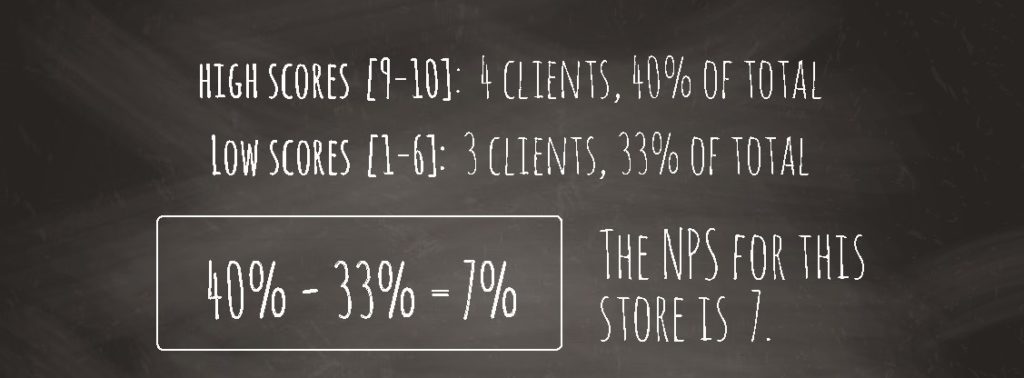
– Highest marks [9-10]: 4 respondents, 40% of the total.
– Lowest marks [1-6]: 3 respondents, 33% of the total.
[40% – 33% = 7] => So the store’s NPS is 7.
The results have to be interpreted differently as well. For instance, an NPS score above 0 starts to be acceptable, while a score above 50 is considered as excellent.


NPS


What does the NPS means?

What could explain that?

The main reason is related to the new commercial and technological paradigm. Having a ‘reasonably satisfied’ customer is not enough anymore, even less an unsatisfied one. We have to try to reach excellence in the way we treat our customer and we want them to be amazedHis experience in our store or while he uses our product has to be unique, rewarding and humanly pleasant.

It has to be like this because of the numerous competitors against which we have to develop our economic activities every day. The risk to lose a customer is now a lot higher than before because of the competition and the use of the new technologies. If we don’t impress our customers, another company will.

Moreover, treating the customer like that has another advantage, as the respondents who give us the highest marks 9 and 10 in survey questions like showed previously are customers who might eventually actively recommend our products to their relatives. This is why our salespersons have to seek the highest marks possible, ideally a 10 score every time. How to reach that goal?

First of all, excellent marks come with an excellent treatment: give a professional image when needed but be close to your customer when required. There is no question to be chewing gum, avoiding eye-contact or making calls while you are talking with a customer. You have to be respectful towards him and serious while doing your work. Thus, it is important to perfectly know the product you are selling and correctly and convincingly answer to the customer’s questions. It is essential to give a feeling of security and to be close to the most loyal customers. It is not acceptable not to call a customer you see every day by his name.


How to increase NPS?

For all these reasons, non-negotiable standards or protocols of attention are not enough anymore. Of course the question is not to leave them behind, but it is clear that more has to be done. The personalized treatment has to be an inescapable linchpin, thus the customer does not expect only intelligence (meaning skillfulness, rapidity and knowledge) but you also have to show emotional intelligence when you are dealing with him.

Appreciate his opinion, his preferences and, of course, his intelligence.

The goal is to be able to show emotional intelligence in every sale and in every commercial deal , independently of the salespersons’ level of motivation. The following question obviously is: how to do it?

How to show emotional intelligence in our stores when the HQ has failed to do its job properly and leaves us exposed to customers’ reactions?

How to get only 10 marks from our customers even when our store does not offer all the necessary amenities?

How to amaze our customers and make them be promoters when they are surrounded by so many companies offering the same product as ours?

What is my personal goal? Well, I want to contribute to the company’s happiness and to the retail sector’s excellence by seeking always 9 and 10 marks from our customers in order to reach the 50 score and above for the NPS.

Do you want to improve your NPS?


CapKelenn in luxury retail

CapKelenn is the primary certification in Retail Coaching worldwide, certifying managers in Retail to really become coaches for their sales teams, facilitating the transition towards a supreme clienteling savoir-faire. CapKelenn delivers the certification in 12 languages on all the 5 continents. CapKelenn accelerates change, thanks to people, with results that are fast, visible and sustainable, contributing to fertilize a client experience that is memorable and personalized.


Learn how to with our experts

LUXE ATTITUDE: THE LUXURY RETAIL SALE CEREMONY

LUXE ATTITUDE: THE LUXURY RETAIL SALE CEREMONY

– Would you like something to drink?

– A tea, for me, please … with milk and saccharin, please.

– And for you, sir?

– A sparkling water, please.


We are not in a bar but in a luxury store, and this couple receives a soft drink to liven up their experience in the store. Retail is Retail, but each sector (cosmetics, fashion, shoes, sports, DIY, restaurant…) has its own codes. And luxury has very timeless representational codes, yet in continuous evolution: the Luxe Attitude.


In contact with managers and salespeople, who also make our experience as coach-trainers a true luxury, we have trained and refined this Luxe Attitude, for French and Italian brands. I share my particular observation of this Luxe Attitude, from the people’s perspective:


Self-esteem

The challenge for the salesperson (or client advisor or Sales consultant or Fashion expert…) is to occupy their legitimate place in the mutual relationship with the client, and cultivate positive thinking such as: “as a salesperson, I “EXIST”; I am not a mere flower pot, even if my client can potentially spend, in 15 minutes, in my store, the equivalent of my annual salary.” This self-esteem enables the sales person to deliver value added rewarding customer experience, based not only on a desirable product, but also on this possibility of sincere human connection and interaction, to contribute to a greater well-being of the client, and provide an experience that makes the customer feel even happier. Despite this economic imbalance, the sales representative is here to empathize with that client. This self-esteem implies being able to connect with the client, look at the client in the eyes, call him by his name, dare to ask open questions to discover, and generate not only a sale, but also a memorable wow experience, at the height of the brand. Obviously taking care of the staff’s self-esteem does not constitute a decree-law. It is transferred and cultivated thanks to a daily consideration in the employee experiences, in management rituals, individual (one-to-one coaching sessions, annual development plans) and collective sessions (inspiring morning briefs for example).


Service vs Servility

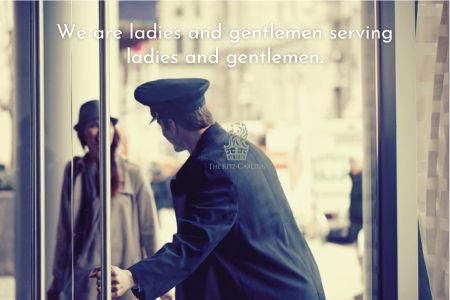
The Ritz-Carlton hotels defined an enlightening mission for their teams: “We are ladies & gentlemen, serving ladies & gentlemen!”. This statement values ​​the exquisite sense of service, and precisely moves away from a sense of servility, which would be less rewarding. This subtle distinction represents a fine line between “service and servility” lies in the hands of the managers, to enable true, authentic and sincere relationships between their employees and the customers in luxury context.
Brand ambassadors

In recent years, we could hear in renown brands: “you are brand ambassadors”. At Apple, managers even say “You are THE brand.” How to “behave” and embody a brand promise like Hermès, Dolce Gabbana or Apple, for a 22-year-old novice salesperson? Elegance when dressing, verbal and non-verbal skills… contribute to embody the brand values. In luxury, the attitude does not come only from know-how, but a lot from behaviors, and personal “class”, that maybe developed!


Collections, shows and Catwalks

All managers and sales fashion experts vibrate with collections, shows and launches. When Alessandro Michele, GUCCI’s Creative Director, launches  the Aria collection, on April 15, 2021, which included a wink to Balenciaga, the next day all the teams in stores were sharing with enthusiasm with their customers, (customers and salespersons are fans of the brands) this creativity and originality that energizes the team.


Clienteling

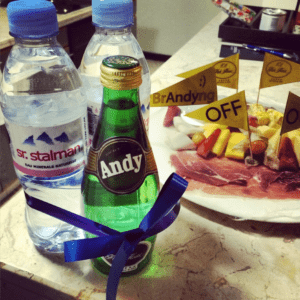
When my friend Andy Stalman arrives at his hotel room in Bogotá, tired after a 13-hour flight from Spain, he can’t believe what he’s seeing. On the table, a Perrier bottle bears his name: Andy. An Evian bottle bears his surname name: Stalman. And the welcome canapés have little flags with the title of his latest book (Brand On-Off). Andy is in shock! And then, he remembers that a month ago, he had already stayed in this same hotel, and the receptionist, during check-out, asked him, with great class, for his email address. She even dared to ask what his company did. Andy was able to talk about his book and his thoughts on branding. Luxury is about asking with honest interest. Luxury is to write down and remember. Luxury is delicately executed. Luxury is generating an experience in which they make you feel unique. Clienteling is about systematizing and executing loyalty with that hyper-personalization that generates a moment so wow, an experience so unforgettable, that we want to share: Fans, in all senses. The staff in luxury brands are Craftsmen not only in producing hand-made products, but also in delivering unique distinguished human experiences.
 

Selling Ceremony

As the psychologist Vanessa Gault says: “The beautiful gesture is one so absolutely right, so precise, so perfect, that it seems easy, forgetting the sum of practices, knowledge and intuition of which it is the signal.” At CapKelenn, we talk about dancing with the client in 8C’s. The way a client advisor says hello, connected emotionally in the first seconds, discovers the client’s needs, leaves the counter to hand over a bag with 2 hands or even opens the door, represents ceremonials based on rituals. Like a dancer who, after hours of training, is capable of performing stunts that seem simple… even for the Closing phase. With covid, luxury stores receive less tourists and now need to really take a better care of the local customer; this is to really sell (in the better sense of the word) and enhance conversion rates. The closing phase is absolutely part of the selling ceremony, and must be trained, rehearsed, practiced regularly.


The power of words

Luxury is also experienced thanks to its linguistic elegance, enabling the evocative power of words, inspired by the lexical field of each brand. The French language, for example, includes a total of 60,000 words, of which an educated person masters about 40,000 and uses daily about 4,000. With 500 words a person survives every day. The challenge of luxury is to identify and impregnate each salesperson with the 20 to 150 keywords of a brand and its sector that a salesperson, even a new comer, must master and include in their lexical. NLP (NeuroLinguistics Programming) reminds us how automatic and unconscious the function of language is. Then, it can be the purpose of a coaching and training effort, initial and continuous, with perhaps, quiz and shadowing, to accompany a salesperson towards this mastering of proper vocabulary.
 

Story Telling

The power of words is also translated into the narrative of a powerful story telling: passionately telling the story of the “Maison”, conveying the story of each of its iconic products. The sale of the iconic Kelly bag at Hermès must be accompanied by the narration of the scene in which Grace Kelly, surrounded by paparazzi as she gets out of a car, conceals her belly, being pregnant in 1956, with a bag that would be renamed… “the Kelly bag”. Handling anecdotes, dates, icons, inspirations … constitutes the magic of the Luxe Attitude. We love that they tell us stories and that they relate them… with passion. And this narrative skill may be trained up to mastering.


Sensory experience

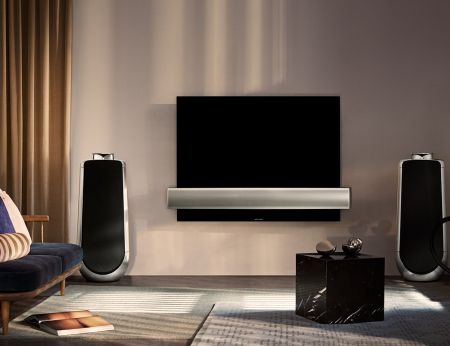
In a Bang & Olufsen store, the sales expert invites us to sit on a sofa, in front of a television with speakers, an authentic auditorium, and asks you for our favorite music. Ready? Then comes on the music. Wow! High voltage Experience. You obviously “desire” this level of acoustic in your living room. It’s hard to get off that couch. The sale is done, almost by itself. The very meaning of a customer experience. Steve Jobs used to say, “In general, people don’t know what they want until you show it to them!” Show, smell, touch, taste, connect with the sensations and emotions, that are the drivers of decisions. Symphony for the 5 senses…. in which Amazon cannot compete.
 

Brand of a country

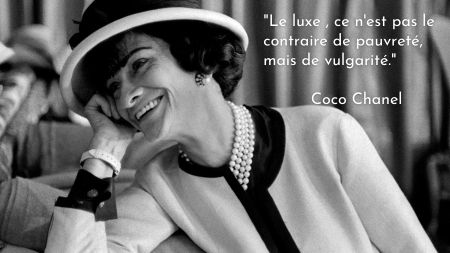
Chanel is a symbol of France; Armani of Italy. If I sell a Mah Jong by Roche Bobois, even in a Minnesota or Berlin showroom, I must convey “l’art de vivre à la française” (and pronounce this promise to the best of my ability in French). For an American or German customer, this furniture means a “piece of France” at home. And the “Consultant Designer” must be able to permeate this French character; this “Frenchness”, or “Italianness”, of each brand.


Digital luxury salesperson

The new luxury is also time and space. How long, how many seconds, would it take for a brand to answer to a chat query on their website? Beyond 10 seconds, today a Consumer would consider it slow. A real challenge for the store operation ! And if they offer me a virtual personal appointment, will this interaction be as intense as a face-to-face experience, on an emotional, sensory level? And in this virtual video appointment, does the salespersons remain seated or are they able to get up, walk around the showroom and show the products to the customer with video from their smartphone, and even close sales, if the customer so wishes? As we shared in the last version of Retail Coaching book, perhaps that is a part of luxury of this 2021: live a whole shopping experience, even without moving from home.


The Luxe Attitude, is that attitude that transmits this timeless sensation of embracing the sublime, of expressing the desire to own the perfect piece, to feel intensely alive, to feel… unique.
CapKelenn in luxury retail

CapKelenn is the primary certification in Retail Coaching worldwide, certifying managers in Retail to really become coaches for their sales teams, facilitating the transition towards a supreme clienteling savoir-faire. CapKelenn delivers the certification in 12 languages on all the 5 continents. CapKelenn accelerates change, thanks to people, with results that are fast, visible and sustainable, contributing to fertilize a client experience that is memorable and personalized.


area manager

AREA MANAGER: «POINT GUARD» OF THE RETAIL ORGANIZATION

area manager

AREA MANAGER: «POINT GUARD» OF THE RETAIL ORGANIZATION

Area manager are a crucial piece in retail organizations as he/she transmits the management strategy to stores and restaurants. To do this, they travel often, and part of their management is done remotely, so their biorhythms need to adapt to specific management rituals. These rituals include visits to the units, weekly video calls, daily emails, area meetings, product launches, etc. The area manager needs to distinguish between the important and the urgent to increase the effectiveness of his rituals. We are going to detail some of these rituals and provide the keys so that they are properly developed to increase the positive impact on their teams and on their own management.


The email of the area manager

This common form of communication is an abuse in many companies, hundreds of emails are stored in the inbox of a area manager. We not only have to pay attention to quantity, but to quality: sometimes they are long, repetitive and boring. Some suggestions for writing emails are the following:

  • The subject of the email must be precise (encompassing the general message) and short (no more than 6 words).
  • Mark the option “urgent” when it is really urgent. If almost all are marked as urgent, that “urgency” is diluted.
  • Capital letters and exclamation marks (!!) can be interpreted as aggressive.
  • Bold, underlining and italics can be used sporadically to highlight something specific, without overdoing it.
  • The body of the text should not be longer than 10-15 lines.
  • The courtesy must also be kept in writing.
  • If the topic is sensitive, it may be better to discuss it in person.
  • The spacing between paragraphs gives a sense of order and structure.
  • Use multiple shipping with caution, especially if it is sent to store managers and higher hierarchical positions.
  • Spelling and style checking is a non-negotiable standard for an area manager.
  • Be careful with humor or irony. The recipient does not see the writer’s face or hear a tone of voice to interpret the meaning. Emoticons can make up for it to some extent.
  • It can be useful to use editing software to make the email attractive with photos, graphics, etc., especially with informational emails.


The weekly video launch on WhatsApp

How do you have to build this video message to make an impact?

  • Positive and convincing tone, looking at the camera.
  • Do not record against the light and the camera at eye level.
  • Share the results of the previous week without boring you with details.
  • Congratulate stores or restaurants on their KPI achievements.
  • Express your gratitude to a seller who has agreed to change the store to cover a time off sick.
  • Request initiatives for new promotions.
  • Indicate which stores you will visit during the week.
  • Duration of no more than 90 seconds.


Visiting stores: presence 100%

As a link between the headquarters and the points of sale, the area manager must take care of empathy and the visit itself. Visits must be scheduled so that store managers prepare them, although on specific occasions it may appear by surprise. So one goal of the visit is to empower the store manager. Perhaps it is he/she and not the area manager who has to write the report indicating the key figures, the diagnosis and the agreed action plan. The area manager will receive it and provide its added value, correcting and validating from their perspective.


The individual weekly video call

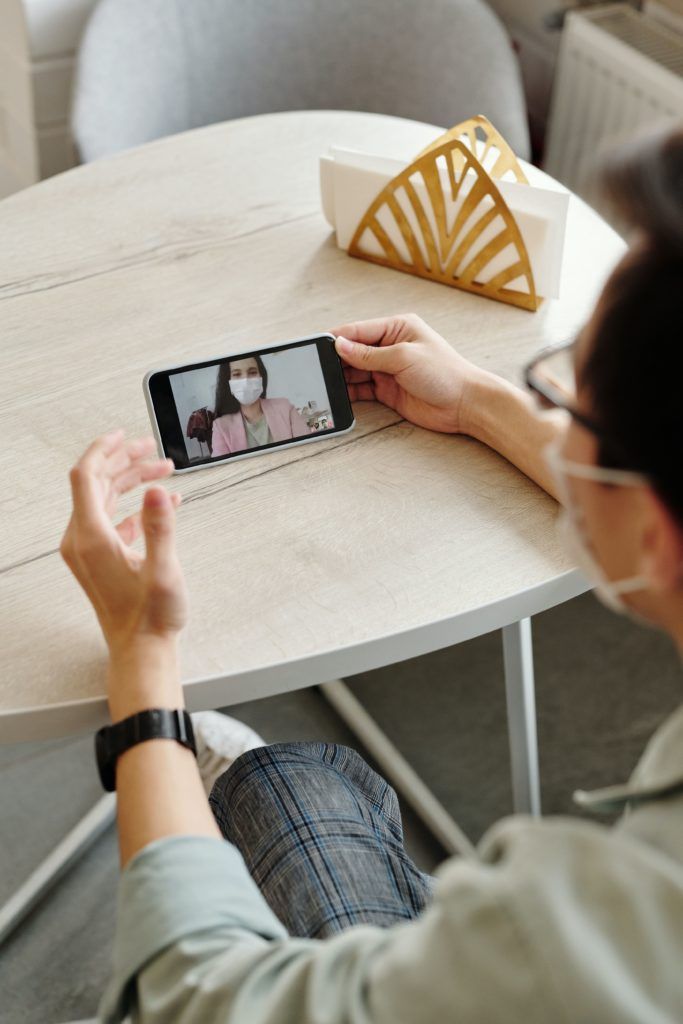
Many area managers travel thousands of kilometers a year, with the consequent fatigue, back pain and stress. Thus video calls with applications such as Zoom, WhatsApp or FaceTime can replace 1/3 face-to-face visits. To be effective, it is necessary:

  • Fixed and structured schedule, with a duration of 15 minutes and breaks between sessions every 45 minutes.
  • It is an ideal format for coaching because both people are seated and concentrated.
  • The store manager generates commitments and sends a summary email in the next few minutes.
  • Area manager has before him the scorecard and the commitments of the previous session.
  • He can request a tour of the store with the phone, showing the merchandising, the store, the vendors …


The zone meeting

The zone meeting requires specific rules to be successful:

  • Previous agenda: the regional director must send it a week before to those in charge so that they can insert topics if they need.
  • Preparation: if the area manager is going to request specific interventions from his managers, he must notify them in advance.
  • Roles: the timekeeper notifies when each participant has 1 minute left to speak and the secretary takes notes and sends them the next day.
  • The pineapple of the word: only one person speaks at a time and the pineapple, like any other object, symbolizes the turn to speak.
  • Animation in coach mode: the meeting leader can invite participants to reflect in writing and share their ideas. At CapKelenn we use “tests express”, written questions that require an answer on a scale of 0 to 10. For example: “How effective has the Christmas promotion been?”
  • Check-in and check-out: the question “how are you?” allows you to calibrate the energy and “what do you take?” creates an environment of sincerity.
  • Punctuality: the door closes at the indicated time. Everyone’s time is important.
  • Alliance: the rules of the meeting are built between everyone (speaking turns, rest time, courtesy …).
  • Games: ideal for re-energizing. There are many games, but an example can be: the coach hands each person a post-it and plays music. When he stops it, a circle is generated and each one places the post-it on the back of the closest colleague and writes a quality of this person.
  • Walking coaching: retail lives on foot, so the area manager looks for animations so that participants get up and continue working. The area manager delivers mission letters to each group of 2-3 people, they go outside to talk about the mission. When they return, they should share the fruit of their reflection in 1 minute. This is how creativity is generated, benchmark.


The team video call with the area manager

A group videoconference can be an alternative to innovate and, of course, a necessity in the middle of a pandemic situation. Video call is practical, cheap, saves time and transportation costs, reduces carbon footprint, the visual impact is higher than the sound of a phone call, etc. But video call also has a number of rules:

  • Clear invitation with access links validated by each participant.
  • The area manager must create the group in advance and contact everyone in a single call.
  • The “share screen” option is very useful for sharing visual and synthetic documents.
  • Ensure the quality of the connection, being preferable the network cable instead of WiFi.
  • Wear headphones to listen and make yourself heard better.
  • Settle in a quiet place and avoid interruptions.
  • It is advisable to connect 3 minutes before to offer a more relaxed space as if it were a meeting in person.
  • The initial check-in (“how are you?”) and the final check-out (“what do you take?”) are doubly important.
  • Speaking a little slower and modulate the voice.
  • Perhaps humor does not work as well as in person.
  • The area manager gives and recovers the floor. So he keeps everyone’s attention.
  • Tests express are very useful for quick evaluations.
  • ATROMI animation method: Accommodation (welcome and thanks); Topic (summarize what to talk about); Rules (rules during the session); Objective (what is intended to be achieved in the meeting); Method (phases of the meeting); Information returned (feedback, doubts and suggestions).


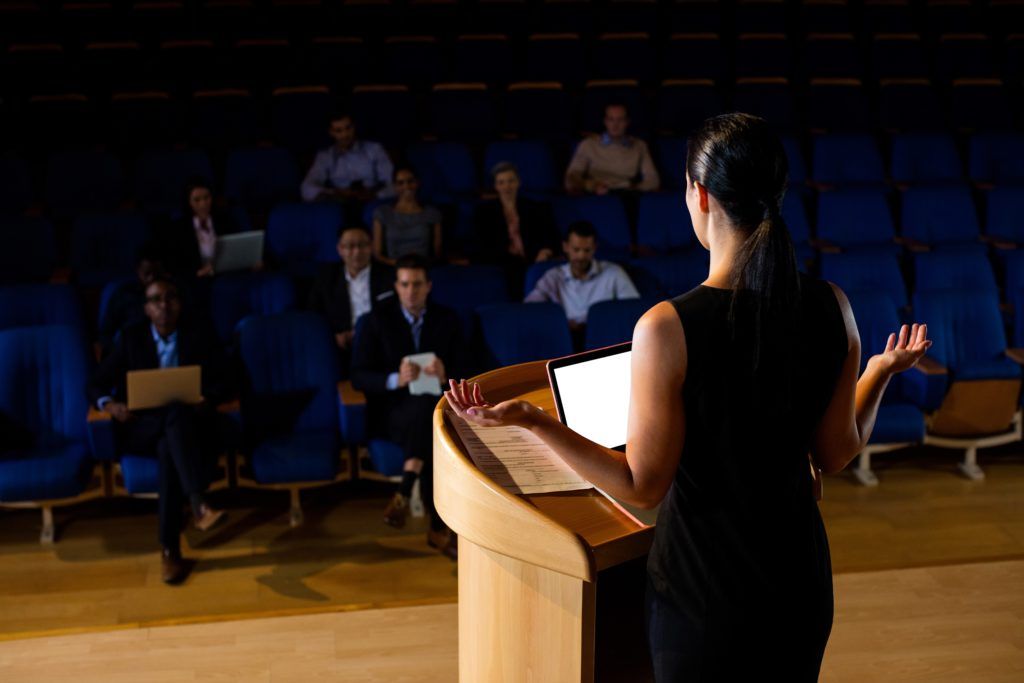
The public discourse of the area manager

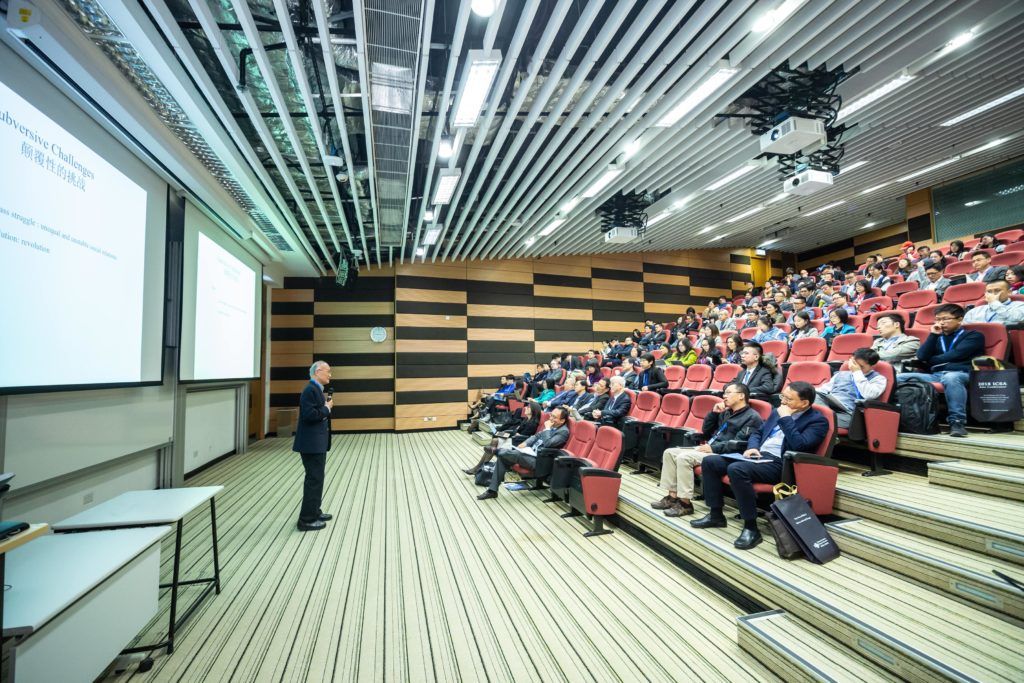
Some networks organize conventions or launch events in which the area manager must present a speech. Speaking in public can be scary, so we’ve summarized a few tips to help improve:

  • Rehearse and practice over and over again
  • Record trials and analyze them to detect areas for improvement
  • Abdominal breathing
  • Drink water before speaking to relax
  • The introduction and the conclusion are the two most relevant parts, so they have to be impactful and energetic.
  • Visual technique of the M: look at 5 people united in the shape of an imaginary M. This gives the audience the feeling of covering the entire room.
  • Rehearse storytelling: know how to tell anecdotes and test them before with friends. In addition, it is ideal that it includes a touch of humor.
  • Non-verbal communication: modulate the voice to alter moments of energy with more relaxed moments; feet well anchored; straight body posture, etc.
  • Silence generates authority and knowing how to handle times of silence is essential.
  • Be inspired by professional speakers.
  • Practice theater.
  • Never apologize for not knowing how to speak in public.


The SAAR model

The area manager is also related to the top management with whom it has to be aligned. He has to help his boss decide and to do this he has to build trust and legitimacy. For this, the SAAR model can be applied:

  • Situation: describe the current situation clearly, briefly and objectively.
  • Alternatives: although viscerally you want to promote a solution, the data can raise several alternatives.
  • Analysis: evaluate each alternative objectively and with data in hand. The cost, ROI and consequences of each alternative are measured.
  • Recommendation: the area manager should involve, give his opinion as if it were his business.

This communication system generates a progressive trust between the boss and the area manager and can proactively give rise to feedback that positively affects the results. This method is, in short, an aid for decision making.

These recommendations are some of those that you can find in the book of Benoit Mahé Retail Coaching: how to boost KPI’s with Emotions.


CapKelenn in luxury retail

CapKelenn is the primary certification in Retail Coaching worldwide, certifying managers in Retail to really become coaches for their sales teams, facilitating the transition towards a supreme clienteling savoir-faire. CapKelenn delivers the certification in 12 languages on all the 5 continents. CapKelenn accelerates change, thanks to people, with results that are fast, visible and sustainable, contributing to fertilize a client experience that is memorable and personalized.


DIGITAL TRANSFORMATION IN RETAIL

DIGITAL TRANSFORMATION IN RETAIL

Digital transformation has been, for years, one of the biggest challenges facing the company, be it large, medium or small. The fourth industrial revolution that Klaus Schwab named includes an unprecedented technological development in which digital tools take on a predominant role. In this context, the retail sector is obliged to reinvent itself and adapt to a new type of business organization and new consumption dynamics.


Resistance to digital transformation in retail

Up to 90% of retail companies have a well-defined digital strategy according to some studies such as The Digital Transformation PACT. However, at CapKelenn we find a lot of resistance to this digitization by highly qualified professionals: “that is something very complex”, “now we do not need it”, “we cannot stop to think about new technologies at the moment”. These are some pretexts that hinder a modernization whose results are amply tested.

Before continuing to read this article, ask yourself the following questions: Are your customers the centre of your business strategy? Do you record all interactions with customers and draw conclusions about their purchasing dynamics? To what extent are the supply chain data with e-commerce data? Could you further automate internal processes?

These questions are intended to sow the seed of self-awareness, just as we like to do at CapKelenn. So that you are the one who reflects on how to run your business, get the most out of digital tools and set up a team focused on excellence. All that with the aim of accompanying you in the digital transformation of your business. Below we will give you some guidelines.


Optimize digitization in the management of your business

The digital transformation in retail must begin within the organization itself, questioning traditional management models and evaluating which new systems would add value. It is about integrating the “world off” and the “world on” to provide an omnichannel experience.

Omnichannel is a very consistent global brand experience from one channel to another, so that the client takes advantage of all digital resources (such as social networks, web, blog, etc.) to buy. This multitude of channels requires a solid internal coherence to turn the purchase into a holistic experience.

Thanks to automation, you will get rid of tedious manual processes and be able to focus on aspects such as omnichannel, which do generate value for the business. This digitization includes, for example, the integration between the supply chain and e-commerce data. So you can have an adequate level of stock, streamline purchase orders and control the supply of products with higher turnover.

The analytics provided by digital tools allow us to know purchasing patterns, product trends and customer habits. In this way, we can predict the degree of acceptance that a new product will have, the level of demand according to external factors, and even customize special offers for each client.


Digitization in the customer relationship

Digital transformation in retail is also a paradigm shift in the relationship established with the customer. Users spend a lot of time with their smartphones and tablets, so these tools are a powerful ally for our sector.

Have you tried creating WhatsApp groups to offer special promotions? This is one of the most used applications and originality in the way you use it can make a difference. For example, the WhatsApp Video function is useful to show the physical store and its products to a potential customer who has no availability to approach personally.

WhatsApp facilitates the relationship with consumers during the digital transformation process. Just as it can be used as a sender, it is also important to take care of our role as a receiver. Such a widely used application is an ideal way to receive suggestions about the shopping experience, comments on products and even (why not?) complaints.

In this sense, the transparency of the post-sales service is beyond doubt. The contact system must consider the “usability” factor and we, as an organization, owe the client an agile, concrete and satisfactory response.


CRM: Retail ally

A CRM (Customer Relationship Management) is a computer system that facilitates the company / client relationship. Traditionally, physical cards have been used to collect customer data manually. The Internet was a revolution and databases began to be used in programs such as Excel or Access. Digital transformation involves a further step and many businesses opt for these systems.

A CRM enables the digitization of data regarding customers to get to know them better: interests, modes of behaviour in the store, time preferences, favourite means of contacting the company, etc. This way we get an exhaustive profile of each consumer and the strategy we build around them is more precise and personalized.

Although sometimes computer systems may seem complex, a CRM operates in two simple phases. As we have seen, in a first phase it collects customer data related to a multitude of factors. The type of business that applies this system will determine the relevance of one or the other factors, since the needs are not the same for a restaurant as for a perfumery. In a second phase, the CRM guides the specific actions that the business must take.

Consequently, the data does not remain in the air, but is translated into specific and personalized strategies to accompany each client before, during and after the purchase.


Digital transformation in your team

Digital transformation in retail must also have the training of the work team. Employees have to imbibe a methodology equipped with a wide variety of digital tools. The objective is to bring up the figure of the connected seller: connected to the tool, to his client, to the time.

His training in the different digital applications that are part of the corporate strategy is essential to build a “phygital” store. This concept is explained by Benoit Mahé, PCC coach and master in NLP, in the following video (English subtitles available):

Not too long ago, the point of contact with the customer at the point of sale was the time of payment at the cash register. Today, when we talk about the connected salesperson, we mean an advisor who is interested in the customer’s concerns. To accompany you on your purchase, to make suggestions and recommendations. All this in a physical environment that incorporates the digital world in its multiple aspects. Thus, the technological devices available to the customer help them turn their shopping experience into a game, something fun and dynamic.

To sum up

At CapKelenn, we encourage you to join the digital transformation in your business. The retail sector cannot lag new technological trends. Precisely, the fundamental characteristic of retail, direct contact with the client, requires adapting the attitudinal patterns of consumers. If it is clear that technological devices have a potential in all aspects of social life, points of sale are one more vector of that reality.


CapKelenn in luxury retail

CapKelenn is the primary certification in Retail Coaching worldwide, certifying managers in Retail to really become coaches for their sales teams, facilitating the transition towards a supreme clienteling savoir-faire. CapKelenn delivers the certification in 12 languages on all the 5 continents. CapKelenn accelerates change, thanks to people, with results that are fast, visible and sustainable, contributing to fertilize a client experience that is memorable and personalized.


Gone are the excuses that block taking a step further. Digitization provides an opportunity to align with new trends and thus connect with an increasingly demanding audience.

PSYCHOLOGY AT THE SERVICE OF RETAIL TRADE IN STRESSFUL SITUATIONS

PSYCHOLOGY AT THE SERVICE OF RETAIL TRADE IN STRESSFUL SITUATIONS

Psychological health has become essential in the current socioeconomic situation. Covid-19 is causing a series of human reactions that have an impact on the organization and on the profit and loss account of retail businesses. As well as on the mood of retail professionals. Stress situations are reproduced in stores that remain open and in merchants who have temporarily closed. If intersubjective relationships have characteristics of extraordinary complexity, intrasubjective relationships are no less.


Psychological health for retail shops

There are two factors of force majeure that have suddenly appeared in the retail sector: isolation and uncertainty. Both psychological illnesses manifest in physiological expressions such as difficulty sleeping, lack of appetite, anxiety, sadness, irritability, fear or panic. To help us deal with this situation of isolation and uncertainty, psychology, in its therapeutic, neurological and social aspects, stands out as a crucial resource.

Therefore, CapKelenn offers you a psychological health service applied to commerce. We want to anticipate psychosocial risks and accompany managers, franchisees and retail staff who are facing situations of tension and insecurity. Firstly, we offer management care for the couple and children for those who remain at home burdened by professional and family responsibilities. Moreover, we help dismissed employees using emotional management techniques.

Listening by a Retail Coaching professional allows the person to vent their fears and frustrations. First of all, to get out of the loop. Secondly,to be able to positively rebuild a personal and business strategy. Psychological support in retail has become a necessity to seek corporate wellness.


Current stress situations caused by the Covid-19

In his book The Art of Becoming Bitter, the psychologist Paul Watzlawick collects a multitude of harmful attitudes to ourselves. We still reproduce because they are apparently unconscious. These are behaviors that harm us, hindering our emotional development and, thereby, having a negative impact on our mental health. They do not seem to have a positive solution. Here are some reactions that retail professionals may be experiencing.


Situations of tension in open chain stores

The shops that remain open during the health alert are those related to basic goods and services (food, telecommunications, health, transport, etc.). In addition, those whose functions can be performed by employees at home. The main causes of anxiety are fear of contagion, pressure from managers and the influence of negative client emotions. Some of the stress situations generated by the Covid-19 can be:

  • “Clients convey their anxiety and fears to us, so I end the day with morale on the floor”
  • “The incivism of clients crushes me”
  • “We are working and exposed when our bosses give us orders from their homes, teleworking”
  • “We fear for our health because we are exposed daily to a huge number of clients”


Situations of tension in closed store chains

A high percentage of the business fabric corresponds to shops and restaurants forced to close while the health alert lasts. Both store and restaurant chain owners and employees are facing numerous adversities. That creates a climate of tension, insecurity and fear:

  • As regional director
    • “It is difficult for me to keep my team motivated and focused, who is working at home”
    • “Our product (fashion, luxury) is not essential. And although we could sell online, the team does not consider it appropriate” (cognitive dissonance)
    • “Our peak of activity occurs precisely on these dates. It’s frustrating to give up the year for lost and not being able to do anything”
  • As an employee or store manager
    • “I feel lonely, isolated and without perspective”
    • “With my children at home, I feel overwhelmed. I only have moments of 10 minutes to communicate. My bosses can communicate in a shocking way in just 10 minutes”
    • “I have been fired, I fear for my income and how to face the expenses that still follow”

Therefore, these examples are illustrative of a generalized feeling of panic. It affects the cognitive level and paralyzes our positive reactions. As we observe, this psychological crisis transversely affects the entire retail sector: shops, restaurants, hotels, banks, etc.


Logotherapy

First of all, it is necessary to identify those actions that we produce or those inputs that we receive that undermine our self-esteem.Then, it is convenient to go to the conscious root to make sure that we ourselves are responsible for our happiness and our balance. Nothing is powerful enough to sink our morale.

In his monumental book Man’s Search for Meaning, the neurologist and psychiatrist Viktor Frankl recounted the brutalities he suffered in various Nazi concentration camps. Following these painful and traumatic experiences, he studied the human being’s attitude. Even devoid of everything, he transcends his difficulties because his dignity and freedom are indestructible.

Frankl developed a psychotherapeutic method, logotherapy, based on the search for the meaning of existence. So that we take responsibility for ourselves and for others through a positive perception of the world. It is time, therefore, that the managers and employees of chain stores face this negative situation caused by an external agent and take responsibility for their actions.


Psychological health in Retail

For the neurologist and psychiatrist Boris Cyrulnik, “pain is inevitable, suffering is optional.” After trauma such as that caused by the pandemic we are experiencing, a new personal and professional development must be rebuilt based on resilience in commerce. This concept refers to the ability of Retail professionals to overcome a difficult situation.

At CapKelenn, we want to accompany you and your team to manage a process that goes from initial panic to a vision for the future. We want you to take back the reins of your business. The phases that follow in this psychological development vary in intensity and duration according to people. But the ultimate goal is the same: to prevent professional exhaustion caused by emotions of stress and vulnerability to guarantee corporate well-being.

Through online or face-to-face workshops, we promote the sincere expression of emotions. This is the first step to unblock the atavistic fear that becomes resistant in our psyche. We drive the coach’s stance at key moments, including recognition, empowerment, and personal consideration.

The anticipation of psychosocial risk is intended for managers and employees alike. So that the retail coaching training acquired by the manager will help them apply it with their staff. In times of crisis, solutions have to be collective and psychological health in retail is essential to save the team and, with it, the store.

“If it is not in your hands to change a situation that causes you pain, you can always choose the attitude with which you face that suffering”.


CapKelenn in luxury retail

CapKelenn is the primary certification in Retail Coaching worldwide, certifying managers in Retail to really become coaches for their sales teams, facilitating the transition towards a supreme clienteling savoir-faire. CapKelenn delivers the certification in 12 languages on all the 5 continents. CapKelenn accelerates change, thanks to people, with results that are fast, visible and sustainable, contributing to fertilize a client experience that is memorable and personalized.


Viktor Frankl

Skip to content